How Agentic Commerce Protocol (ACP) Enables Deterministic Checkout, Higher Conversion Reliability, and AI-Driven Visibility
Why Early ACP Adoption Gives Shopify, BigCommerce & WooCommerce Stores a Competitive Advantage

Date
Feb 19, 2026
Author
GPT Checkout Team
Why Early ACP Adoption Gives Shopify, BigCommerce & WooCommerce Sellers a Structural Advantage
The Next Commerce Shift Is Already Underway
Every major shift in eCommerce has followed the same pattern:
Early adopters gain disproportionate visibility
Late adopters scramble to retrofit infrastructure
Market leaders are decided before the mainstream notices
Agentic Commerce Protocol (ACP) is entering that early phase now.
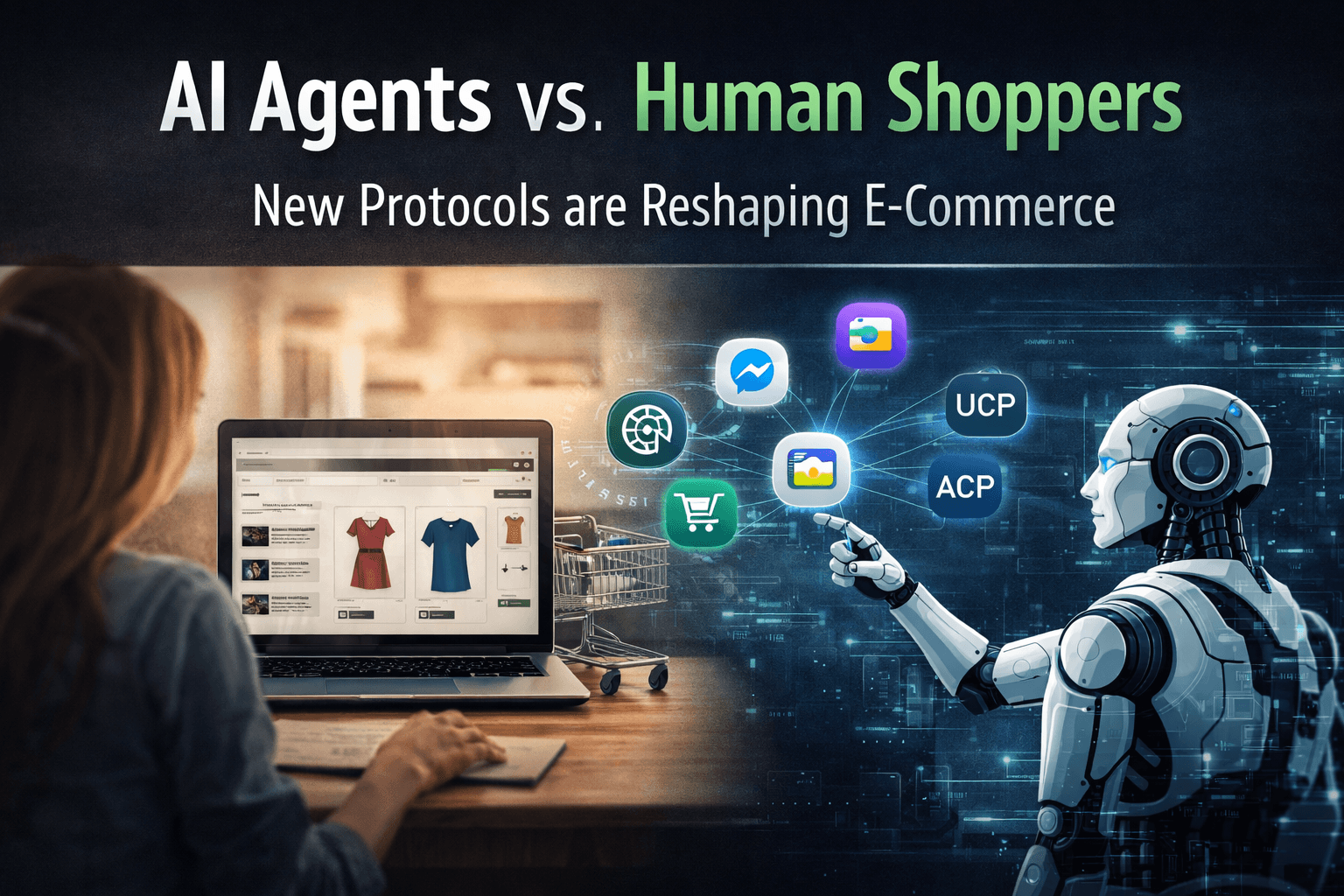
While most merchants are still optimizing product descriptions and paid ads, AI agents are beginning to participate in purchase flows.
The merchants who prepare first will benefit from a structural advantage.
What Early ACP Adoption Actually Means
ACP (Agentic Commerce Protocol) enables AI agents to:
Programmatically verify product availability
Confirm final landed cost (including tax and shipping)
Execute checkout through deterministic flows
Complete transactions without UI-dependent ambiguity
If you’re unfamiliar with how ACP works, read our technical breakdown:
👉 What Is Agentic Commerce Protocol?
Traditional checkouts were designed for human interpretation.
ACP prepares your store for machine execution.
That distinction is critical.
1. Less Competition in AI-Mediated Discovery
Right now, very few stores are ACP-enabled.
This means:
Lower protocol-level competition
Higher visibility inside AI-driven commerce flows
Faster adoption inside emerging ecosystems
Early ACP sellers are competing in a thinner field.
As AI-assisted discovery grows, being execution-ready becomes a filtering mechanism.
2. Deterministic Checkout = Higher Conversion Reliability
AI agents operate differently than humans.
Humans tolerate:
Shipping recalculation
Tax changes mid-session
Variant pricing adjustments
Dynamic fees injected at checkout
Agents do not.
If final landed cost cannot be deterministically verified, the session aborts.
We call this the “Agentic Abort” problem.
Early ACP adopters eliminate this friction.
The result:
Cleaner execution paths
Higher intent conversion reliability
Reduced invisible checkout loss
If you haven’t tested your store’s execution flow yet, see:
👉 How to Enable ChatGPT Instant Checkout on BigCommerce
3. First-Mover Advantage in AI Ecosystems
Historically, protocol-level early adopters win:
Early Stripe integrators reduced friction before competitors
Early Apple Pay adopters converted mobile traffic faster
Early Shopify merchants captured organic eCommerce growth
ACP is similar.
Early implementation creates:
Data accumulation advantage
Process maturity
Infrastructure confidence
Internal operational readiness
Late adopters face integration pressure once AI-driven commerce becomes standard.
4. Increased Trust in AI-Mediated Purchases
As AI assistants begin recommending and executing purchases, merchants that support structured, machine-verifiable flows appear:
More modern
More reliable
More secure
More transaction-ready
AI agents prioritize clarity.
ACP reduces ambiguity.
Clarity increases recommendation confidence.
Recommendation confidence drives transaction volume.
5. Preparing for AI-Driven B2B Procurement
In B2B commerce, the impact is even greater.
Industrial, wholesale, and multi-location buyers increasingly rely on automation for procurement decisions.
ACP enables:
Pre-flight verification
Tax compliance confirmation
Shipping determinism
Budget cap enforcement
Without these elements, AI-driven B2B flows default to competitors.
What Happens If You Wait?
Waiting creates three risks:
Infrastructure retrofitting cost
Competitive protocol gap
Invisible revenue leakage from AI-assisted sessions
Early adoption compounds advantage.
Late adoption protects against loss.
The decision is strategic, not experimental.
Frequently Asked Questions
Is ACP replacing traditional checkout?
No. ACP enhances checkout by enabling machine-verifiable execution layers.
Is ACP only for AI traffic?
Initially, yes. But AI-assisted discovery and execution are growing rapidly.
Does ACP work with Shopify, BigCommerce, WooCommerce and Custom Stacks?
Yes. Implementation varies by stack, but structured exposure layers can be integrated.
Do I need ACP right now?
If your store receives or expects AI-assisted discovery traffic, execution readiness is becoming important.
Final Thoughts
ACP is not a feature.
It is an infrastructure upgrade.
The merchants who implement it early will benefit from:
Cleaner execution
Higher confidence transactions
Competitive insulation
AI ecosystem visibility
If you want to evaluate your store’s readiness, start here: